
Get analysis, insight & opinions from the world's top marketers.
Sign up to our newsletter.
Defining marketing effectiveness is key if marketers are to justify investment and deliver on the profession’s promise of brand growth. Silas Lewis-Meilus, Global Head of Media Operations at Haleon, explains.

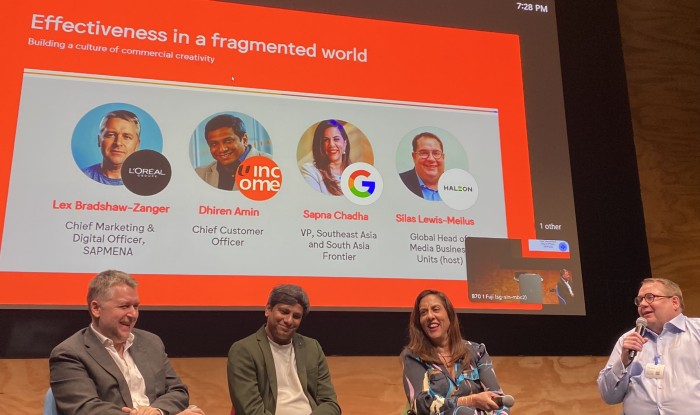
I had the pleasure of running a WFA and Google sponsored panel on Effectiveness in a Fragmented World.
It shouldn’t be surprising that this theme remains critical for members of WFA: despite the constant influx of shiny objects – Web3, AI, Retail Media, etc. – WFA’s annual survey of key focus areas consistently shows that Effectiveness remains a top priority for a marketer.
While it’s perfectly reasonable to debate the reality of this intent vs. where marketers spend their time, it is heartening to see that most agree that marketing’s success should be measured on how it influences people to build connections with brands and, in the end, drive product purchase.
On the panel were three brilliant marketers – Sapna Chadha, VP, Southeast Asia and South Asia Frontier at Google, Lex Bradshaw-Zanger, Chief Marketing & Digital Officer, SAPMENA at L’Oréal, and Dhiren Amin, Chief Customer Officer at NTUC Income.
We sought to dig into some of the fundamental challenges we face as marketers and how we balance the various tensions which exist in our roles, namely:
What was not surprising during this discussion was that everyone was tackling how to define and create a culture of effectiveness within their companies. Naturally, this definition was grounded in what success in an effectiveness-based marketing approach looked like. There was general consensus that modern marketers need to be able to connect their work to business outcomes.
For the panel, this manifested in a few spaces:
Each of the panellist’s organizations approached building an effectiveness practice from within differently: when thinking about Haleon’s effectiveness journey and how it differed to these as well, it became clear that there isn’t one solution that will work for all.
In a post attribute-everything world, my presumption was that everyone was pursuing a variety of measurement solutions designed to connect the dots and attribute business outcomes to marketing influences. In this discussion, there was a real spectrum of approaches. In one case, a marketing team was working with internal product developers to create causal impact models based upon Bayesian principles. At the other end, another panellist asserted that they had accepted there were marketing KPIs and business KPIs and both had to live in connected but separate spaces. Finally, in a more traditional manner, the third panellist relied on tried-and-true tools such as MMMs and attribution models.
While each of the panellists had crafted and cultivated their own approaches, the level of respect and interest each panellist had for the other’s methods was interesting. No matter how seasoned these leaders were, there was always an underlying desire to learn.
At the end, one panellist talked about how if you measure everything, you will kill marketing. This statement was even more intriguing given that panellist’s organization has a wealth of consumer data. What a transition to our discussion on how to cultivate creativity while being an effective marketer.
We’ve had these debates for years. It’s always creativity vs. data-driven marketing, programmatic media buying, business-outcome focused marketing or effectiveness-oriented marketing. Despite being a proponent of some of these, I loved the idea that without the space to thrive, creativity is difficult to foster within a company.
Another panellist talked about the fact that creativity and effectiveness can coexist. For their organization, this manifested in leveraging data to create audience cohorts, allowing marketing teams to create better, deeper insights. These were leveraged with internal stakeholders to help build trust around the directions being taken and a fostering a mandate to invest behind them.
There were a few key learning moments for me:
