
Get analysis, insight & opinions from the world's top marketers.
Sign up to our newsletter.
When you’ve been with the company since Day 1, change is inevitable. Cheryl Goh, Group VP of Marketing at Grab, explains how discovering marketing, defying consensus and being purpose-driven are key to her career.

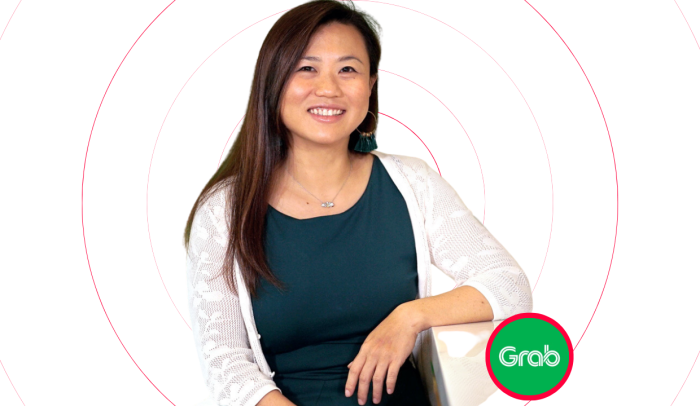
Working in a start-up means never standing still, no matter how big it gets. “I always tell people that working at Grab, you feel like you have to interview for your job every six months, because the job just changes every six months, whether it's the geography, the scale, the complexity…” says Cheryl Goh, CMO at the Southeast Asian superapp.
Current growth areas include deeper expansion into the eight markets where it provides a range of life assists ranging from taxis to cars, food delivery to finance as well as the new dine out and reservation platform.
Founded in 2012 in Malaysia as MyTeksi and rebranded in 2016 as Grab, the app now connects millions in 500 cities across the region, with Goh managing a team of around 500 reports covering the marketing, sustainability and loyalty functions.
Growth, she argues, will not just come from brand stretch but also brand reliability: “I also think being a reliable brand that people trust drives growth. In a world of uncertainty, if we can be that brand that is steadfast in our consumer promises, in what we deliver, it will also drive growth.”
Anthony Tan, founder and CEO of Grab, is the reason Cheryl got into marketing. She met him when he was setting up the company and he offered her a job. “Only at that point did he tell me it was a marketing role,” she says.
Cheryl assumed that she’d be offered a product development or business development role, as that was her background but “he told me: look, we don't have much money, so a typical marketer will not do. I need someone that knows how to grow a business, and your portfolio in business development is probably right”.
That career sidestep triggered a host of questions to friends who already worked in marketing, ranging from how do I budget? Or why do agencies just repeat what I told them?
Thirteen years later she is a board member both at Malaysian Airlines (non-executive) and at Grab, where she runs the separate marketing, sustainability and loyalty teams and while the link between loyalty and marketing is clear, sustainability is a personal passion (she is also a committee member for Tengah Island Conservation in Malaysia as well as a fellow at social impact organisation Acumen).
One of Cheryl’s big goals is for members of her team to succeed in other roles. Earlier this year a former member of her team, Chantsuda Thananitayaudom, was named Country Head of Grab Thailand while in May, Ma Tuan Trong took on the role of Managing Director for Grab Vietnam, having previously worked in leadership positions across marketing, deliveries and commercials.
“We have many of those stories in my team, people from marketing who were able to show that they were very business savvy, they were very commercially focused, and they went into other roles, whether that's in business or in product,” she says.
This commercially savvy marketing approach reflects both Grab’s start-up roots but also Cheryl’s pre-Grab roles in product development.
“I think one very important thing that we try to do for marketers is help them understand the P&L, the components that make the business work, so they understand that we are contributing to something very, very important,” she says. “We don't just do advertising. We think very much about the consumer experience, because at the end of day it doesn't matter how much marketing you do. If the experience is crap, no marketing will save us. We build a culture of trying to push for what's necessary, and be very comfortable crossing swim lanes, reporting lines to make sure that gets done.”
This attitude led to her building a market research team to ensure that the whole business understood what consumers truly wanted. “It wasn't to track brand health or any of that. It was because I needed some proof points so I could get product, operations and customer service to change the way they were doing things in line with what our customers expected of us.”
Her biggest regrets centre around accepting consensus rather than challenging what was being proposed. Grab is, she says, quite consensus driven but “I think there have been one or two moments where I felt like I should not have agreed, and I should have pushed very hard”.
“There have been a few times where I think I confused consensus with decision and clarity,” she notes. “I should have stepped in front of the bus and said ‘No, this just will not fly’. My regrets are generally around those kinds of decisions or not being far stronger in what I think and know is right.”
This approach of being the voice of dissent has also applied to the marketing ‘rules’ that she’s encountered along her career journey, often breaking rules she didn’t even know existed.
“A lot of people told me that OOH media was for broad brand awareness, you know, and it's not used for conversion. But for our business, we generally launch in a locality in a certain area, we'll have cars or food delivery, or whatever it is, in a very specific area, in a specific part of town in Singapore or Jakarta, and the easiest way for us to launch is to make sure that area knows that that service exists and billboards are an extremely useful medium,” she says.
Her other clear learning is the importance of dedicating time to focus on hiring the right people and building a strong team. “Whenever we have not done a good job, it is always when we don't spend enough time in coaching, teaching and learning and developing the people in our teams.”
Marketers, she argues should never be insecure about hiring the very best. “I am still the head of marketing for Grab primarily only for one very big reason: I hire really well and every specialist in my team is better than me in in the area they were hired. Like the person that is doing my brand and country marketing is way better at doing it than I am. The person that is doing my comms is way better at doing it than I am. I think that as long as you do that your career will continue to grow”.
As a tech company you would expect Grab to be an early AI adopter, and certainly the company has invested heavily in training and resources to build tools and ensure that the company is well versed with the technology.
Nevertheless, Cheryl argues that the key skill for today’s marketer is not the ability to adopt AI but to spot all the patterns that identify coming changes and adapt faster than your rivals.
“As a marketer, you need to see signals before they become obvious and then decide how to act on them. So in the case of AI, we definitely saw signals but what's important isn't so much ‘I've done a campaign using AI’ but I need to make sure that my back office is powered by AI,” she says.
The skill of pattern recognition goes well beyond technology, covering “not just in trends like AI, but also consumer behaviour. What's changing? What's shifting? How is the algorithm changing the way people think? How is it changing people's perception?”.
While there are many critics of marketing as a profession, Cheryl is very comfortable with her role at Grab and says it’s up to individuals to find the category that they feel most happy with.
“We give livelihoods to drivers and we help small businesses grow. We bring convenience to people's lives,” she says. “It just depends on what you’re marketing. If you're not comfortable marketing cigarettes, then don't market it. You can obviously do marketing for the UN or something that you care about. But marketing is just a tool. More than anything, you must work for a company that you believe is purposeful.”
She sees the impact that Grab makes first hand as part of marketing team immersions. “I speak to drivers who are disabled, and Grab is the way in which they make an income. In fact, in Singapore our top performing driver is actually a person with disabilities, and he did the most amount of rides, gets the most amount of tips and five stars,” she says. “Marketing is like a tool, a weapon, a muscle and you just need to decide what you want to train it to do.”
WFA wants to celebrate the world’s best marketers and explore the journeys they are on to deliver better marketing. This series helps distil some of the biggest learnings of our CMO members. As we are great believers in the power to learn from successes as well as missteps, we hope this will give our readers the opportunity to learn more about the things they are most proud of, but also about where they may have done things differently. More at https://wfanet.org/CandidCMO.
If you'd like to nominate someone with an interesting story to be interviewed for the Candid CMO series, get in touch with Camelia Cristache.
